











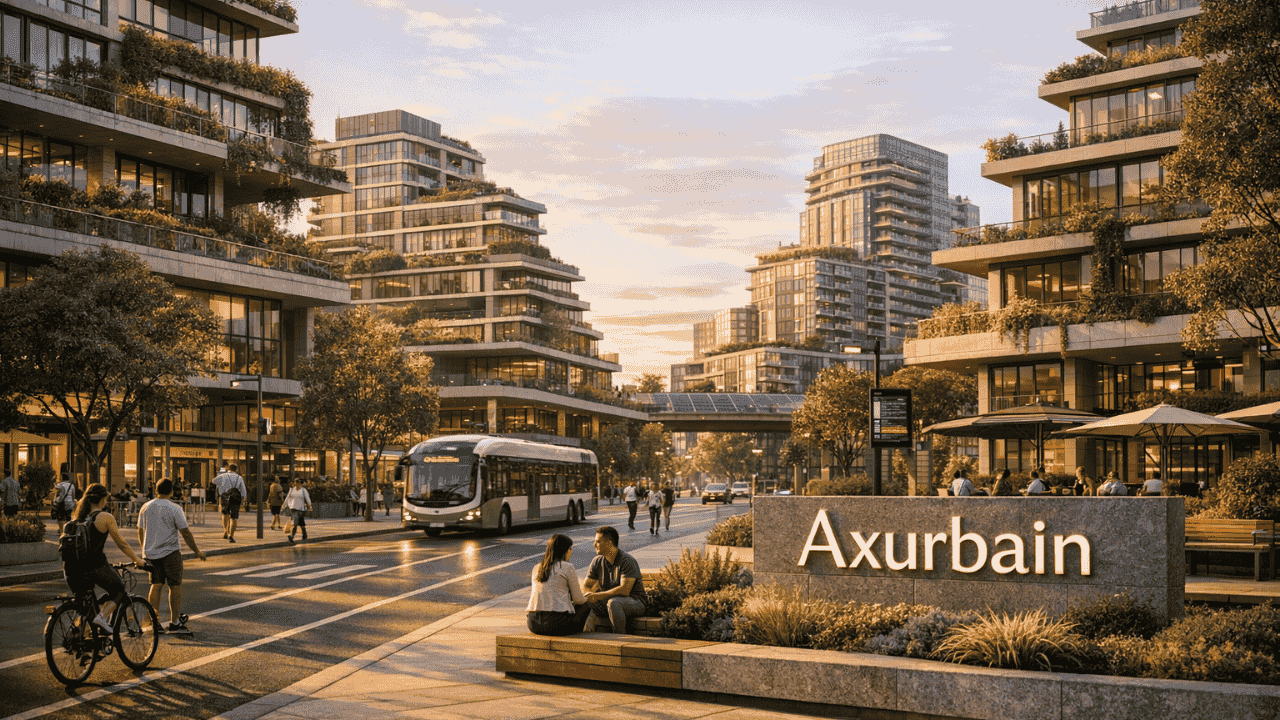
Cities don’t fail all at once. They grind people down slowly—long commutes, hostile streets, heat that lingers, housing that eats paychecks, public spaces that feel designed for nobody in particular. The problem isn’t growth. It’s the stubborn belief that cities should still be planned the way they were decades ago. Axurbain pushes back against that mindset. Not politely. Directly. It argues that urban life only works when cities respond to how people actually live, move, work, and age—without pretending that technology alone will save the day.
Axurbain shows up in conversations where planners, designers, and city residents are done with surface-level fixes. More lanes don’t solve congestion. Shiny buildings don’t create community. Apps don’t fix broken streets. What matters is how everything fits together—and who it serves.
Cities That Adapt or Cities That Break
Urban pressure isn’t abstract. It shows up in overcrowded transit, rising heat deaths, fragile power grids, and neighborhoods hollowed out by speculation. Axurbain takes the position that cities either adapt in integrated ways or keep piling stress onto residents until the system cracks.
Adaptation here doesn’t mean tearing everything down. It means rethinking priorities. Streets designed for speed get redesigned for safety. Districts zoned for single uses get loosened so daily life doesn’t require constant travel. Infrastructure stops being invisible until it fails and starts being monitored, maintained, and adjusted before collapse.
Axurbain rejects the idea that urban planning should chase short-term efficiency metrics while ignoring lived experience. A city that runs “efficiently” on paper but exhausts its residents is not succeeding. It’s coasting toward long-term decline.
People First, Not Traffic First
For too long, cities have treated people as obstacles to be managed—pedestrians to be herded, cyclists to be tolerated, neighborhoods to be bypassed. Axurbain flips that hierarchy. Streets stop being pipelines for vehicles and start acting like shared civic space.
That shift has consequences. Slower traffic means fewer deaths. Wider sidewalks mean more local commerce. Streets designed for human scale encourage eye contact, conversation, and trust. These aren’t soft outcomes. They influence crime rates, public health, and economic resilience.
Axurbain places daily comfort on equal footing with infrastructure performance. Shade matters. Seating matters. Safe crossings matter. A city that ignores these details bleeds social energy, one frustrating trip at a time.
Technology That Serves, Not Watches
Axurbain doesn’t reject technology. It rejects lazy tech thinking.
Sensors, data systems, and automation can improve how cities manage water, energy, traffic, and waste. But Axurbain treats these tools as support systems, not control mechanisms. The goal is better decisions, not constant surveillance.
When traffic signals respond to real conditions instead of fixed schedules, congestion drops. When energy systems adapt to demand instead of wasting supply, emissions fall. When maintenance becomes predictive instead of reactive, breakdowns decrease. None of this requires treating residents as data points to be tracked.
Axurbain draws a hard line around privacy and transparency. If residents don’t understand how systems work—or don’t trust how data is used—technology erodes legitimacy instead of strengthening it. Cities that ignore this reality end up with backlash, not progress.
Nature as Core Infrastructure
Concrete alone doesn’t regulate heat. Asphalt doesn’t absorb floods. Axurbain treats nature as working infrastructure, not decorative filler.
Urban trees lower temperatures street by street. Green roofs reduce energy loads and manage stormwater. Connected green corridors support biodiversity while giving residents daily access to outdoor space. These interventions don’t just look good in renderings. They change how cities behave under stress.
Axurbain also recognizes that access matters. A single showcase park doesn’t compensate for neighborhoods without shade or clean air. Distributed green space—small, frequent, reachable—has more impact than monumental projects that serve limited areas.
Cities built without nature spend decades trying to engineer their way out of environmental problems they created themselves. Axurbain cuts that loop short.
Mobility That Respects Time and Bodies
Movement defines urban life. Axurbain treats mobility as a public health issue, not just a logistics problem.
When walking and cycling feel unsafe or inconvenient, people default to cars—even for short trips. That choice fuels congestion, pollution, and inactivity. Axurbain cities reverse that equation by making the healthiest option the easiest one.
Integrated transit matters here. Buses, trains, bikes, and foot traffic work best when designed as one system, not competing modes. Transfers should be obvious. Schedules should be reliable. Streets should protect vulnerable users by design, not signage.
Axurbain doesn’t promise frictionless movement. It promises reasonable movement. Less wasted time. Fewer injuries. More dignity in how people get where they need to go.
Mixed-Use Districts That Feel Alive
Single-purpose districts empty out at predictable hours. Office zones go dark at night. Residential areas turn silent during the day. Axurbain pushes for mixed-use environments because cities thrive on overlap.
When homes, shops, services, and workspaces share space, neighborhoods stay active. Short trips replace long commutes. Local businesses benefit from steady foot traffic. Public spaces get used throughout the day instead of spiking briefly and then sitting empty.
Axurbain treats zoning flexibility as a tool for resilience. As economic conditions shift, spaces can adapt instead of falling obsolete. Buildings that can change use age better than ones locked into narrow functions.
Architecture That Ages Well
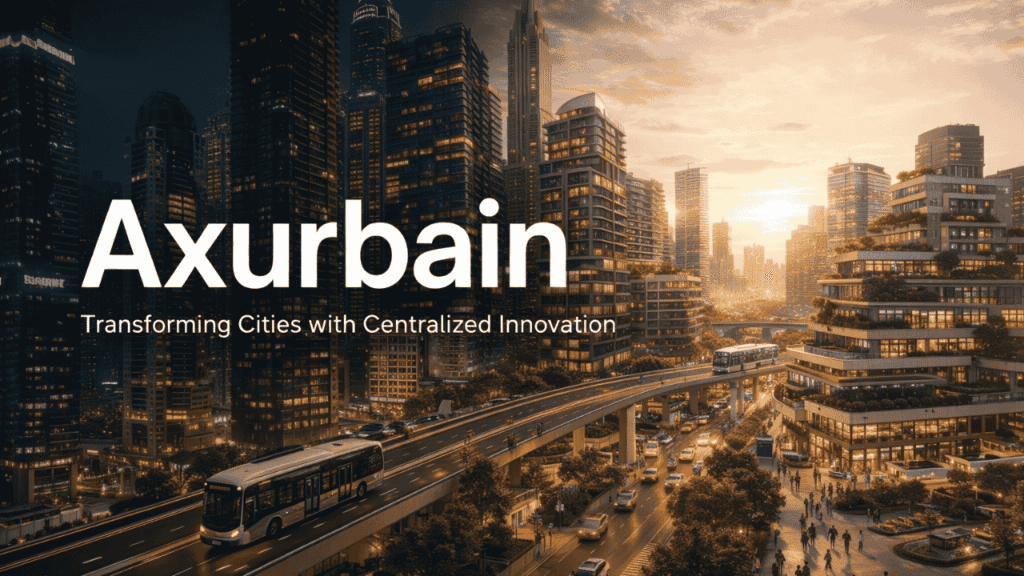
Flashy buildings don’t guarantee livable cities. Axurbain favors architecture that responds to climate, context, and daily use.
Energy-efficient design reduces long-term costs. Climate-responsive layouts improve comfort without heavy mechanical systems. Vertical density, when paired with light, ventilation, and shared space, supports growth without sprawl.
Axurbain doesn’t chase novelty for its own sake. It values buildings that still work twenty or thirty years later—structures that can be modified, reused, or expanded without major disruption. Cities built on disposable architecture pay for it repeatedly.
Public Space as Social Glue
Cities fragment when people have nowhere to gather. Axurbain treats public space as essential civic infrastructure.
Plazas, parks, libraries, and shared courtyards do more than fill gaps between buildings. They create informal networks. They support culture, debate, and chance encounters. They give residents a sense of ownership beyond private walls.
Safety in these spaces comes from design first—clear sightlines, lighting, activity—not from constant enforcement. Axurbain cities aim to make public space welcoming by default, not controlled by exception.
Governance That Doesn’t Lag Behind Reality
Urban systems evolve faster than regulations. Axurbain recognizes that outdated policy can block meaningful change.
Rigid zoning, slow approval processes, and fragmented authority prevent cities from responding to new conditions. Axurbain supports governance models that allow experimentation while protecting public interest.
Digital platforms can help residents participate in planning, report issues, and track decisions. But participation only works when feedback leads to action. Axurbain treats engagement as a responsibility, not a box to check.
Economic Life Without Burnout
Cities exist because they concentrate opportunity. Axurbain aims to preserve that advantage without exhausting the workforce that sustains it.
Innovation districts and startup hubs thrive when infrastructure supports collaboration—reliable transit, flexible workspaces, shared services. Axurbain cities lower barriers for small businesses by reducing friction, not by handing out slogans.
Green employment plays a growing role here. Renewable energy, building retrofits, urban agriculture, and environmental management create jobs tied to place. These roles can’t be outsourced easily, and they strengthen local economies.
Axurbain doesn’t treat growth and sustainability as opposing forces. It treats environmental neglect as an economic risk.
Housing That Doesn’t Push People Out
No urban vision survives without addressing housing pressure. Axurbain confronts this directly.
Density alone doesn’t guarantee affordability. Without safeguards, it accelerates displacement. Axurbain supports inclusive development strategies that keep long-term residents in place while accommodating growth.
That means varied housing types, shared amenities, and policies that prioritize access over speculation. Cities that ignore this reality end up hollowed—vibrant on postcards, fragile in practice.
Learning as a Lifelong Urban Function
Cities educate far beyond classrooms. Axurbain treats learning as a continuous urban process.
Public spaces double as informal classrooms. Digital access supports flexible education. Community centers host skill-building that responds to local needs. This approach prepares residents for economic shifts without forcing constant relocation.
Axurbain cities invest in knowledge infrastructure because adaptation requires informed citizens, not just smart systems.
Culture Without Freezing the Past
Modernization often bulldozes identity. Axurbain resists that impulse.
Historic neighborhoods, local art, and everyday traditions anchor cities through change. Axurbain integrates these elements into contemporary design instead of isolating them as museum pieces.
Culture evolves when it’s used, not preserved behind glass. Cities that understand this retain character without resisting progress.
Where Axurbain Shows Up in Practice
No city applies Axurbain as a single blueprint. Instead, its influence appears in fragments—mobility reforms here, green infrastructure there, participatory planning elsewhere.
Urban regeneration projects reflect this approach when abandoned industrial zones become mixed-use districts shaped with community input. Waterfronts once cut off by highways reconnect to neighborhoods. Old rail corridors turn into active public space.
The lesson is consistent: integrated thinking works better than isolated upgrades.
Limits, Costs, and Hard Tradeoffs
Axurbain doesn’t pretend transformation is cheap or easy.
Upgrading infrastructure costs money. Smart systems require maintenance. Green space competes with development pressure. Balancing public benefit and private investment demands oversight.
The digital divide also matters. Without universal access and literacy, smart systems deepen inequality. Axurbain calls this out directly. Cities that ignore it build exclusion into their future.
Regulation remains another bottleneck. Innovation moves faster than policy. Axurbain pushes for flexibility without surrendering accountability.
The Role of Residents
Cities don’t change through plans alone. Axurbain depends on everyday behavior.
Choosing transit over cars when possible. Supporting local commerce. Participating in neighborhood decisions. Using digital tools without surrendering civic responsibility.
Axurbain treats residents as co-creators, not end users. That expectation is demanding—and necessary.
Where This Direction Leads
Urban growth won’t slow. Climate pressure will intensify. Social inequality won’t resolve itself. Axurbain offers a direction that acknowledges these realities without retreating into fantasy.
Future cities shaped by Axurbain principles will rely more on anticipation than reaction. Data will inform planning, not dominate it. Residents will have more say, not just more apps. Nature will function as protection, not decoration.
The choice isn’t between smart cities and humane cities. Axurbain insists they must be the same thing—or neither will work.
Final Takeaway
Axurbain isn’t a promise of perfection. It’s a refusal to accept cities that quietly drain the people who live in them. It challenges planners, officials, and residents to stop patching failures and start redesigning priorities. Cities that embrace this mindset won’t just function better. They’ll feel better to live in—and that’s the standard that actually matters.
FAQs
What kinds of cities benefit most from Axurbain approaches?
Cities under pressure from rapid growth, climate stress, or aging infrastructure see the biggest gains, especially when systems are upgraded together instead of in isolation.
Does Axurbain require advanced technology to work?
No. Many outcomes depend more on design choices, policy shifts, and community involvement than on high-tech systems.
How does Axurbain handle density without sacrificing livability?
By pairing density with light, green space, mixed uses, and mobility options that reduce daily friction rather than adding to it.
Can smaller cities apply Axurbain ideas, or is this only for megacities?
Smaller cities often move faster because governance is simpler and community engagement is easier to sustain.
What’s the biggest risk if cities ignore Axurbain-style thinking?
They lock themselves into systems that cost more to maintain, worsen inequality, and struggle under environmental stress—until change becomes unavoidable and far more expensive.